
Build to rent development finance for UK projects
Build to rent development finance is short-term property funding for developers and investor-operators across the UK creating professionally managed rental housing. It pays for site acquisition and staged construction so the scheme can reach completion, establish income and refinance onto longer-term debt.
Build to rent funding for your BTR development
Vortex is a whole-of-market property funding broker, not a lender. Your broker compares business and investment schemes across a qualitative whole-of-market panel, then packages the selected application. Typical construction facilities start around £250,000 and can exceed £25m on larger projects. Every rate, fee, gearing and timing range is indicative. The provider confirms the loan and approval after underwriting.
Share the site purchase price or value, build cost, professional fees, contingency, Gross Development Value (GDV), planning position, sponsor experience, proposed rents, operating plan and exit strategy. Those inputs let your broker assess the likely facility, day-one advance and provider fit.
The free quote is an initial broker assessment, not a credit-backed offer. It shows information gaps and plausible funding routes before you pay valuation and legal costs.
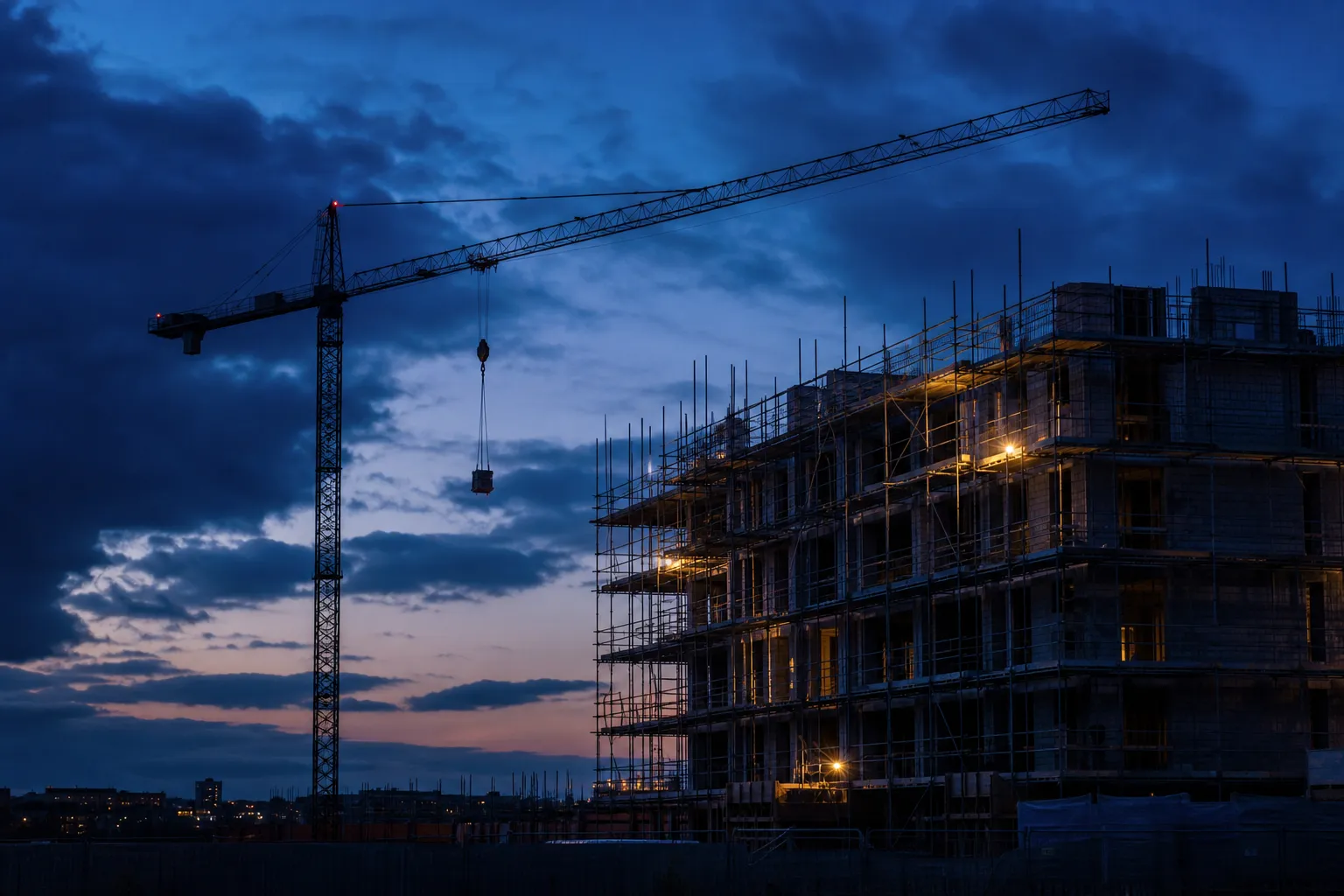
Build-to-rent schemes as a long-term investment
Build to rent developments create new build homes for long-term letting rather than unit-by-unit sale. The model can cover apartments, houses, phased communities and selected mixed-use property where the retained residential element has a credible operating plan.
BTR differs from conventional buy to let because the developer controls the site, specification, construction and initial leasing strategy. It also differs from a standard buy-to-let mortgage, which normally funds an existing or completed residential property. Construction debt carries the project through the build. A longer-term facility may replace it after completion and stabilisation.
This holding model may benefit from capital appreciation, but underwriting needs a repayment route based on current evidence, not an assumed increase in property prices.
Property development appraisal and operating viability
The scheme appraisal should connect land, construction, professional fees, borrowing costs, contingency and completed value. A BTR appraisal also needs a rental projection that identifies unit mix, proposed rent, letting period, absorption assumptions, operating costs and net rental income.
The provider's valuer tests the value of the property and the rental market. The underwriter then checks whether the scheme remains viable if construction costs rise, letting takes longer or the long-term loan is smaller than expected. A high GDV alone does not prove the refinance will repay the build facility.
Tenant evidence may include comparable lease data, local supply, unit specifications and an operator plan. Vortex does not promise a rental figure, letting pace or yield. The valuer and refinance provider make their own assessments.
Planning, phasing and the development project
Planning permission should match the planned scheme. Conditions, Section 106 obligations, Community Infrastructure Levy, utilities and pre-commencement work belong in the programme and cost plan. Careful planning here reduces avoidable gaps between the legal consent, specification and cash flow.
Phasing changes both the loan and the letting operation. A completed phase may begin letting while later phases remain on-site. The underwriter will want to understand shared infrastructure, practical-completion points, when income starts and whether any phase can be refinanced separately.
If the site must complete before the main facility is ready, short-term finance or bridging loans may cover acquisition. That adds another transaction, interest cost and exit condition, so the move into the build facility must be documented rather than assumed.
Build cost and staged development finance loans
These loans normally release construction money in tranches. The monitoring surveyor reviews the budget, inspects progress and reports before the next drawdown. Some lenders fund work after it has been completed, so the developer needs enough working capital to bridge contractor invoices and reimbursement.
The construction budget should separate main works, professional fees, statutory charges, utilities, contingency, financing costs and any operator setup required before first letting. The cash flow should show when each amount is needed and how much equity has already entered the scheme.
Interest rates are only one part of total cost. Compare whether interest applies to drawn funds or the full commitment, along with arrangement, exit, valuation, monitoring and legal charges. The provider confirms all figures in the offer.
Developer, operator and property management team
The property developer must show that the team can deliver the building and operate it as rented housing. Construction experience remains central, but BTR projects also need a leasing and operating plan. The underwriter may examine the main contractor, quantity surveyor, architect, letting approach, maintenance plan and reporting controls.
An experienced developer should provide a track record from similar building schemes and evidence of completed projects. A provider may still lend to a first-time BTR developer, but can ask for more equity, lower gearing and stronger professional appointments.
The operator does not replace the sponsor's responsibility for cost, programme and loan repayment. It gives the underwriter evidence that the completed property can move from construction into long-term operation without an undefined handover.
Development finance specialist underwriting and documents
Underwriting links the borrower, scheme and exit. A clean application commonly includes:
- company structure, identification, credit history and source of equity;
- site contract, title, planning permission, drawings and surveys;
- development appraisal, cost plan, programme, contingency and cash flow;
- professional team appointments and delivery evidence;
- income schedule, unit schedule, comparables and operating assumptions;
- management and letting plan;
- refinance evidence or another defined exit strategy.
Documents must use consistent dates, costs and unit numbers. Packaging the file does not guarantee approval, but it lets the underwriter see how the build, leasing plan and exit connect.
BTR development financing options and lender fit
Senior residential funding is normally the base facility. Stretched senior can add gearing within one agreement. Mezzanine sits behind the senior debt and fills an equity gap at a higher price. Equity or joint-venture capital changes ownership economics instead of adding another loan.
Compare development funding options on day-one funding, LTC, LTGDV, drawdown conditions, covenants, fees and exit flexibility. Standard senior debt can indicatively reach up to 80% LTC and 70% to 75% LTGDV, while the site advance may reach 60% to 70% of current value. The lowest applicable limit caps the facility.
“I need one facility from site purchase to refinance.”
The property development loan and long-term mortgage use different credit tests. We map both at the outset so the build term allows time for completion, letting evidence and the second valuation.
“I want the highest gearing available.”
Higher LTC or LTGDV can preserve equity, but it raises pricing and reduces headroom for cost or exit changes. The better structure leaves enough capital to finish and refinance.
Build-to-rent financing from planning to completion
- Assess the scheme. You share planning, costs, phasing, team, leasing plan, experience and exit. We identify gaps in the appraisal.
- Compare and package. We review capital routes across a qualitative whole-of-market panel, explain the trade-offs, then organise documents for valuation and underwriting.
- Manage to drawdown. We keep the borrower, provider, valuer, monitoring surveyor and solicitors aligned. Funds release under the agreed monitoring process.
Typical development timing is 18 to 30 months including the exit period. The actual term must reflect build duration, phasing, initial letting and refinance. No timetable is guaranteed.
Rental income, occupancy and refinance exit
The exit needs to work before the first drawdown. A completed BTR scheme may refinance onto a commercial buy-to-let or specialist funding facility. The refinance provider assesses valuation, leasing position, stabilised net income, borrower strength and debt-service capacity under its own criteria.
Practical completion does not automatically mean the scheme is stabilised. The exit plan should allow time for snagging, lettings, operating evidence and valuation. Any long-term facility threshold belongs in the original programme.
Unit sales or development exit finance can provide alternative routes, subject to the scheme and lender. Sensitivity testing should show what happens if income is lower, leasing progresses more slowly or the refinance advance falls short.
Property development project cost example
Consider an explicitly illustrative BTR development with a £600,000 site, £900,000 of build and eligible project expenditure, and a £2.2m GDV. Total eligible expenditure is £1.5m. At 70% LTC, the cost limit is £1.05m. At 65% LTGDV, the value limit is £1.43m. The £1.05m LTC result therefore caps this example.
Assume an 8% annual rate and an average drawn balance of £650,000 for 18 months. Illustrative interest is £78,000. A 1.5% arrangement fee is £15,750 and a 0.5% exit fee is £5,250. Add an indicative £2,000 valuation and £3,000 standard legal charge, and the subtotal is £104,000. Monitoring, scheme-specific professional fees and any broker fee are excluded because they vary.
This example does not size the long-term loan. The refinance provider still tests the completed asset, income, letting performance, operating costs and borrower under its policy.
Residential finance questions for BTR schemes
How does BTR differ from buy-to-let?+
Can a facility cover all build costs?+
What letting evidence is needed?+
When can the scheme refinance?+
Could this funding be regulated?+
Build to rent finance matched to the scheme
The right structure funds the site and build, supports the phase plan and leaves enough time for letting and refinance. Send Vortex the appraisal, planning, build budget, GDV, equity, team, income schedule and exit for a free development finance quote. Vortex acts as your broker. The lender confirms pricing, conditions and approval.
Request my free development finance quote